19 South Portland.
"Where every detail is intentional, and every inch is designed."
The brief.
A young family in Brooklyn approached us with a row-house first floor that needed everything: a kitchen reconfigured around how they actually cook, a wet bar built into a forgotten corner, and a powder room that could hold its own against the bones of the building.
The house has good light and better proportions. Our job was to honor what was already working — the moldings, the floor heights, the rhythm of the windows — and add layers that would feel as if they had always been there.
The kitchen.
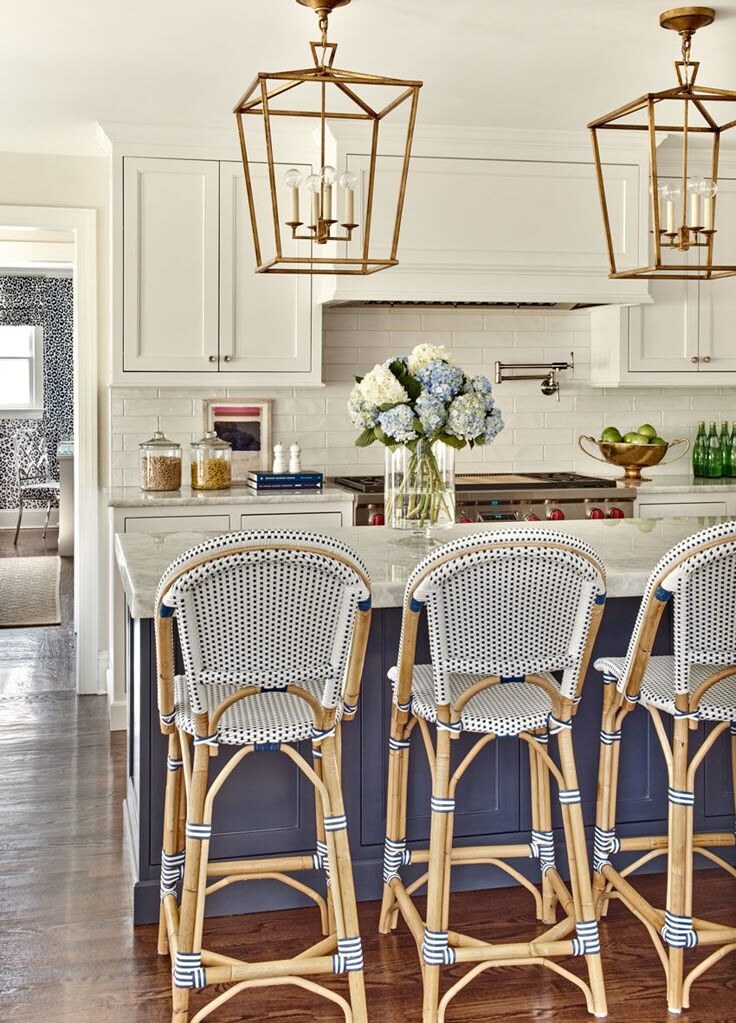
Cream cabinetry against a deep navy island, white subway tile run all the way to the ceiling, brushed brass hardware, and a marble countertop chosen for its veining and its weight. The layout was reworked to put the dishwasher beside the sink instead of across the room, and to give the cook a clear sight line to the dining table on the other side of the wall.
Materials are honest. Cabinets are inset, drawers are dovetailed, the hardware is solid. The kind of kitchen that gets better looking after the first scratch.
The wet bar.
A small footprint, a serious ambition. We built the bar into an alcove off the dining room with sage-green cabinetry, an antiqued mirror backsplash, marble counters, brass fixtures, and a small wine fridge tucked into the base. Open shelving above holds glassware that earns its keep — pieces that get used, not stored.
The bar reads like its own small room. It has its own light, its own rhythm, and its own personality, but it speaks to the kitchen across the wall.
The powder room.
The smallest room in the house, given the most concentrated treatment. A leafy hand-printed wallpaper carries the room from wainscot to ceiling, paired with sage-and-gray paneling, a corner sink that solved the geometry of a tight footprint, and a pocket door that gave the adjacent hallway back its full width.
Powder rooms are where you can take risks. We took ours.